
Reflecting on my previous report for FTN in July 2025, I titled the article, ‘The busy, curious, proactive purchaser replaces caution and selectiveness.’ Fast forward six months—has that sentiment held true? I’m not so sure. While deals are still being made, the process has become considerably more challenging.
Purchasers are increasingly thorough in their due diligence before making offers, and some lawyers, on both sides of the transaction seem to be taking longer than ever to finalise contracts. Timber prices remain stubbornly low. But if I had to pinpoint the single biggest influence on the market, I would say it’s Government Intervention.
Government interference comes in many forms. On a global scale, the ongoing conflicts, such as the war in Ukraine are consuming vast quantities of commodities, including timber.
Meanwhile, President Trump’s frequent international trade tariffs are reshaping global markets, with Canada, a major timber producer, caught in a delicate balancing act regarding its relationship with the US.
On the domestic front, the UK forestry market has seen its confidence erode, primarily due to inconsistent government behaviour. Issues such as the looming changes to Business Property Relief, long delays in forestry authorities’ decision-making on tree planting grants, and the temporary halt on timber imports from certain parts of Scotland to Ireland have created uncertainty. Add to that the ever-shifting rules around carbon regulations, further land reform in Scotland, and the acquisition of land and woodlands with taxpayers’ money via Land Funds, and it’s no surprise the market is experiencing some turbulence.
This century has seen the market recover from a low point in the early 2000s, followed by significant capital appreciation between 2005 and 2022. However, 2023 marked a sharp downturn, with a smaller dip in 2024, and a flat line in 2025. Activity picked up earlier last year, but it’s now showing signs of stalling due to some of the factors mentioned above. Some “old chestnuts” have been languishing on the market.
Despite this, Goldcrest Land & Forestry Group has successfully sold forests in England, Scotland, and Wales off-market in the last quarter, with more transactions under offer. Could this be a growing trend? Possibly but, as always, there’s no one-size-fits-all recipe for success. Off-market deals can work well for purchasers, and in some cases, they can benefit vendors too, provided they are properly advised by independent experts.
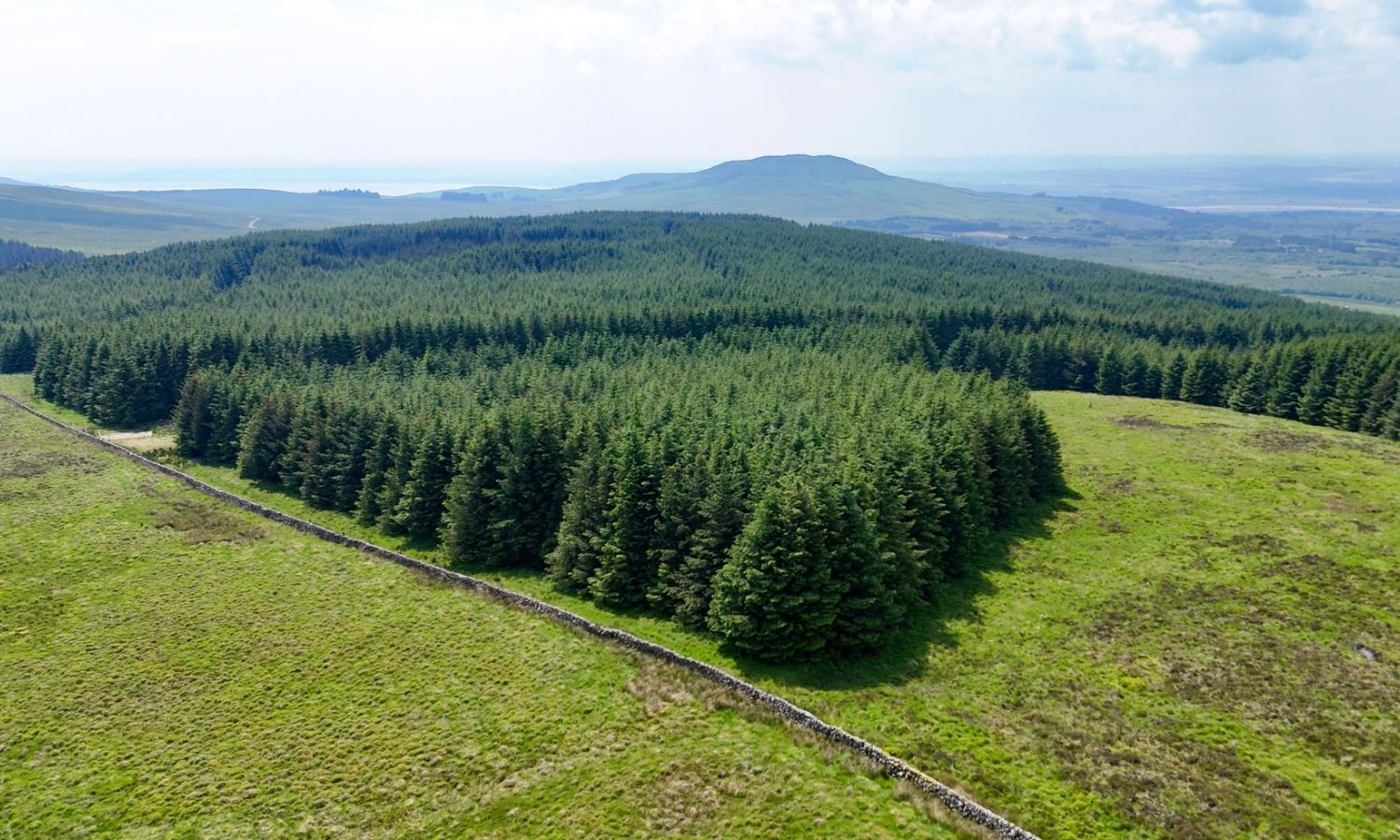
For example, we recently concluded the sale of Headshaw Plantation, an 82-hectare commercial forest in a welllocated area. The final price exceeded the guide of £825,000, representing £15,000 per stocked hectare.
Additionally, off-market Goldcrest sold 175 hectares of mixed commercial woodland in the North East of England for over £16,000 per stocked hectare for 20-year-old crops.
In Wales, we sold properties for £15,000 per stocked hectare for 16-yearold crops and £11,000 per stocked hectare for 11-year-old crops. Another sale in Wales fetched over £18,000 per stocked hectare for 25-year-old crops that had been heavily thinned.
However, while these numbers can be illustrative, it’s crucial to recognise that location, yield class, access, and site conditions can significantly impact sale prices. Stats alone can be deceptive.
There have been very few sales of plantable land in recent months, with a small number of deals transacted in the price range of £7,000-£11,000 per hectare.
A common question I’ve been asked lately is whether it is a Sellers’ or Buyers’ market. When compared to three years ago, there’s undoubtedly better value in the market today.
Timber prices, in particular, seem to be alarmingly low. How long can this last? It’s hard to say, but I don’t foresee any significant rise until we see more enthusiasm from housebuilders.
The UK government’s promise of 1.5 million new homes has yet to materialise on a meaningful scale, and although timber frame homes in Scotland exceed 90%, the figure in England is only around 23%. As the workforce of bricklayers ages, coupled with the growing demand for better insulation and environmentally friendly materials, demand for UK timber is likely to increase, which I am sure will lead to a rise in timber prices. For now, though, it still seems very much like a Buyers’ advantage.
In summary, the market remains somewhat stodgy. While there are still opportunities for the right buyer or seller, the environment is far more complex than it was just a couple of years ago.
